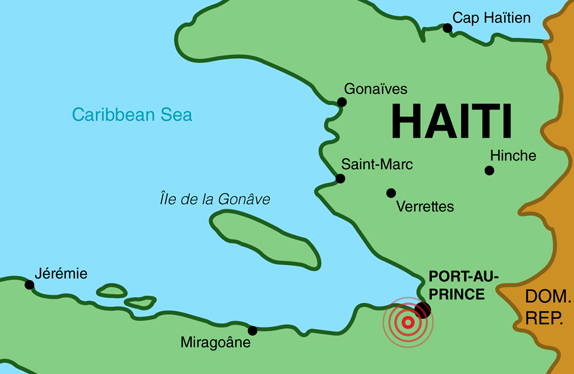
These are some of the highlights of the trip to Haiti that I went on about a month ago. With a few additions/subtractions these are pretty verbatim accounts from my journal that I kept while in Haiti. Sorry its taken me awhile to get to this!
Feb 18, 2012
My day actually began on the 17th when at 2:30 we left Winnipeg to fly to Chicago.

The Team at the Winnipeg Airport (click to enlarge photos btw)

Although I could tell there was a little nervousness on our team, there was much excitement as well. From Chicago we flew to Miami where we were supposed to stay in a nearby hotel for a few hours before returning to the airport. But somehow the hotel lost our reservation and so we bravely decided to stay overnight in the airport. Great idea - just like in the movies (or Amazing Race)! Yeah, not quite. Turns out there was no comfortable seating - so we had tried sleeping in an outside garden/park on some benches.

The outside park (palm trees in the background)

(Not as comfortable as it looks!)
I slept a little but the sound of planes, the cool temperatures and humidity convinced me after an hour or so to try a carpeted area inside the airport. Alas, it was freezing cold with the AC and there were extremely loud announcements every 5-10 minutes - welcoming us to Miami or telling us about the perils of leaving our bags unattended. Keith got very ill this night and I was worried for him and prayed for him during our sleepless vigil. Thanks to God he perked up around 4:30am.

Inside the airport - pretending to sleep.
Our flight to Haiti was uneventful and I was struck at both the natural beauty and poverty that were noticeable as we circled the island. Landing went well but baggage retrieval was interesting; they just throw everything into an open area and everyone searches madly for their stuff! Luckily after a few minutes we all found everything. Then, before leaving the customs area we got a strict warning from Dan; “Don’t let anyone touch your bags. Put your backpacks on in front of you, take valuables out of your packets, and look for the Samaritan’s Purse people.” Yikes, suddenly it got serious but as Keith says “It’s go time!” So we walked out and were immediately accosted by people wanting to help us - for a fee. I was OK since I was the last guy out - but I still ended up giving some pushy guys a few bucks.
For their our SP guy, a Haitian named Roosevelt took us on what was the scariest (so far) vehicle ride of my life! We careened through the streets of Port Au Prince honking, accelerating towards people on the street (including children!), swerving, and barely missing people. Motorcycles, taxis, trucks, etc came within inches of us repeatedly! People crossed the street or walked between the stream of vehicles yet no one was struck. Along the way we saw evidence of the devastation of the earthquake 2 years ago as well as the poverty of the people. Tents for houses, shanty towns, and miles of hole in the wall business went by us for hours. After while I felt overwhelmed with it all and then mostly numb - so much poverty.

Tent houses and shacks, with familiar Samaritan's Purse tarps.

The President's house didn't do well in the quake

Imagine this was your "temporary housing" - for over two years!
Finally we made it to the town of Leogane and the walled SP house which was to be our home. Interestingly it was guarded by not one but three Haitian guards - each carried a shotgun, handcuffs, or other assorted weaponry. Our house leaders were Jed and Peggy, a great couple from Minnesota who had previously been in Ecuador for 20 years. These people immediately made us feel at home. I had a quick nap and then took a spiral staircase to the roof where we had a beautiful view of the huge trees (in this area they have some) and mountains in the distance. Because of security, we can’t just go out and explore so I felt sad about that but I did get to enjoy watching our neighbors on each side of us. Both had their houses destroyed in the quake. Apparently 80% of the houses in this area were destroyed or severely damaged 2 years ago.

Me finding what was to be one of my favorite places in Haiti (the roof of our house)

Although we are in pretty good spirits I also felt a feeling of helplessness as I was watching a little boy over at the neighbors house. We were up on the roof smiling and trying to talk to him down below. We were all enjoying this when eventually this smiling boy made gestures like “please give me something.” Boom - poverty shows its face. And the thing is - you really want to give them something (lots of things) - but it’s not that easy. If you do it can have some real negative effects on you, the family, and Samaritan’s Purse. It’s tough to come in as rich North American’s and feel like just giving someone something can be so strangely complicated. I wonder as I go to bed that night, if we can’t even give something to this poor boy, how can we do something meaningful here in Haiti? Luckily I didn’t have to ponder it long as I had only had an hour or so of sleep the night before and quickly succumbed to my fatigue. Note: If you are worried how you'll sleep in a foreign country just go sleepless the night before - you sleep the following night like a baby!